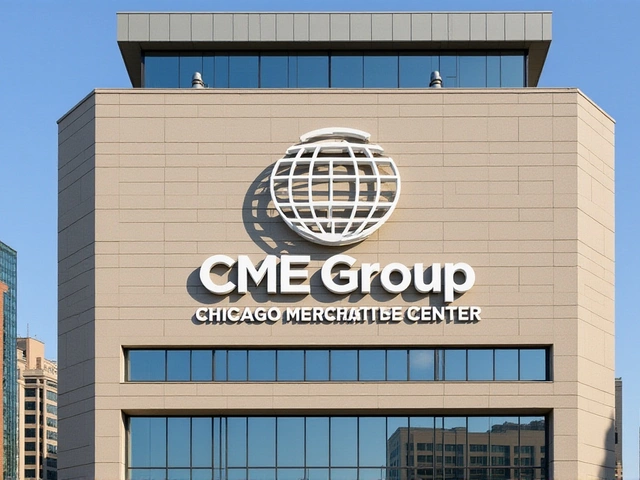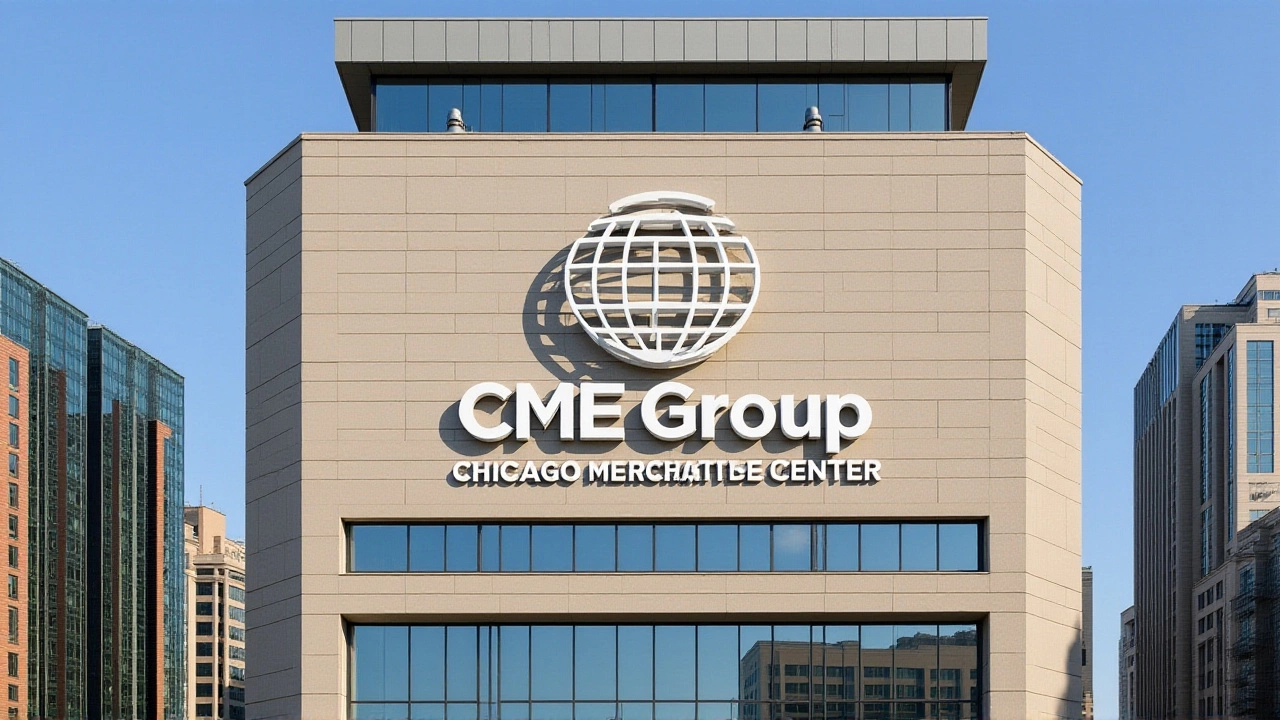
At 9:44 p.m. Eastern Time on November 28, 2025, the world’s most important financial markets went dark—not from a cyberattack, not from a power surge, but because a chiller broke. CME Group, the operator of the CyrusOne data center in Chicago, Illinois, shut down its entire Globex trading platform after its cooling system failed. The outage froze trades in everything from S&P 500 futures to Bitcoin options, impacting roughly 30 million contracts daily—about 90% of global derivatives volume. Traders in Tokyo, London, and New York watched prices freeze on their screens. No one could close positions. No one could hedge risk. And the culprit wasn’t software. It was heat.
The Moment the Markets Stopped
The failure began at 21:44 ET when CyrusOne’s CHI1 facility, a critical hub for financial infrastructure, reported a cascading chiller plant malfunction. Multiple cooling units failed simultaneously, triggering an automatic shutdown of all systems connected to the facility’s thermal management network. CME Group didn’t lose power. It didn’t get hacked. Its servers were fine. But without cooling, the high-density computing racks running its matching engine overheated. And when the temperature hit critical thresholds, the system didn’t just slow down—it shut down entirely.Notifications went out at 03:00 GMT on November 29, just as Asian markets were opening and European traders were preparing for their day. By then, the damage was done. The Dow Jones Industrial Average, S&P 500, and Nasdaq-100 futures were frozen. Gold, crude oil, and even regulated Bitcoin and Ethereum futures couldn’t trade. The Thanksgiving holiday had already thinned volumes. Now, liquidity vanished.
"This Is Not a Glitch. This Is a Warning."
"The CME Group, which prices everything from Treasury bonds to crude oil to the S&P 500, went dark because the machines that run global finance exceeded their thermal limits," said market analyst Shanaka Anslem. "The heat generated by computation overwhelmed the capacity to reject it. This is not a glitch. This is a structural warning."
Anslem’s words echoed through trading floors. Financial infrastructure has evolved at lightning speed. AI-driven algorithms now execute trades in microseconds. Data centers process exponentially more transactions than they did in 2015—when the CHI1 facility was built. But cooling systems? They haven’t kept pace. Energy demand from data centers is rising nearly 30% annually, driven largely by AI workloads. Yet, most critical financial hubs still rely on legacy HVAC designs.
By 7:30 a.m. CT on November 29, CME Group began a phased restart. By 8:20 a.m. ET, it confirmed all platforms—including BrokerTec EU and BrokerTec US Actives—were open. But the damage wasn’t just technical. It was psychological.
Who Else Was Affected?
While CME Group was the only one to halt trading, the CHI1 facility serves other institutions too. Why did only CME go dark? Traders are asking. Some suspect CME’s matching engine runs on a higher-density server configuration than other clients. Others wonder if the cooling failure was localized to one rack, and CME’s systems were more vulnerable due to their scale. CyrusOne confirmed it deployed temporary cooling units and began restoring permanent systems, but offered no technical details on whether the failure was due to aging equipment, poor maintenance, or design flaws.
What’s clear: the incident exposed a terrifying truth. In finance, the most critical infrastructure isn’t the firewall. It’s the air conditioner.
Financial Fallout and Market Reactions
Despite the outage, CME Group’s balance sheet remains strong—a debt-to-equity ratio of 0.12, among the lowest in the industry. But its Altman Z-Score of 0.57 falls in the "distress zone," suggesting investors should watch for hidden pressures. The stock, trading at $278.50 post-recovery, has a consensus target of $283.41. Its RSI sits at 60.05—neither overbought nor oversold—and its beta of 0.08 confirms it moves almost independently of the broader market. In other words: it’s a rock. But even rocks can crack under extreme stress.
Analysts warn the post-holiday volatility could spike. With fewer participants in the market, even small order imbalances could trigger outsized price swings. One hedge fund manager in Chicago told Bloomberg: "We had 12 open positions across three asset classes. We couldn’t touch them for eight hours. That’s not risk management. That’s a system failure we didn’t even design for."
What’s Next for Financial Infrastructure?
Regulators are now scrambling. The Commodity Futures Trading Commission (CFTC) has requested an emergency briefing. The Federal Reserve is reportedly reviewing cooling standards for systemically important financial data centers. Meanwhile, CME Group has hinted at a multi-year upgrade plan, including liquid-cooled server racks and on-site thermal redundancy.
But the bigger question isn’t about hardware. It’s about mindset. For decades, financial firms treated cooling as a utility—like electricity. Now we know: it’s a critical control system. Like a heart monitor in an ICU. If it fails, the patient dies—even if the heart is still beating.
As AI accelerates, so does heat. And heat doesn’t care about quarterly earnings reports or Fed rate decisions. It just rises.
Frequently Asked Questions
Why did only CME Group shut down when other firms use the same CyrusOne data center?
CME Group’s matching engine runs on significantly denser server hardware than most other clients at the CHI1 facility. While other firms may have used the same physical infrastructure, their computing loads were lower, and their systems may have been configured with better thermal margins. The failure appears to have been triggered by a thermal cascade in CME’s highest-density racks—something other tenants didn’t experience.
How long did the outage last, and what was the impact on global markets?
Trading halted for just over 9 hours, from 9:44 p.m. ET on November 28 to 7:30 a.m. CT on November 29. The outage disrupted trading across 30 million daily contracts, including key equity, commodity, and crypto derivatives. With holiday volumes already thin, the lack of price discovery created uncertainty that could trigger sharper moves when markets reopened.
Is this the first time cooling caused a financial market shutdown?
No. In 2012, a cooling failure at a London data center disrupted the London Stock Exchange for several hours. In 2021, a heat-related outage at a Frankfurt facility halted European bond trading. But this is the first time a global derivatives powerhouse like CME Group has gone dark due to thermal failure—marking a new threshold in infrastructure risk.
What’s being done to prevent this from happening again?
CME Group is reportedly accelerating plans to retrofit its infrastructure with liquid-cooled servers and redundant on-site cooling systems. Regulators are also pushing for mandatory thermal resilience standards for systemically important financial data centers. The industry now recognizes that cooling isn’t just maintenance—it’s market integrity.
How does AI contribute to this kind of infrastructure failure?
AI-driven trading algorithms process orders at speeds 100x faster than human traders, generating massive heat in concentrated server clusters. AI workloads are pushing data center energy demand up nearly 30% annually. Many financial data centers still use 2010s-era cooling tech designed for slower, less dense systems. The result? Heat builds faster than it can be removed.
Should individual investors be worried about future outages?
Yes. Even if you don’t trade futures, your retirement funds, mutual funds, and ETFs rely on the same pricing engines. If the core infrastructure fails, price discovery breaks. That means your portfolio’s value could be based on stale or inaccurate data. This isn’t just a tech problem—it’s a financial stability issue.