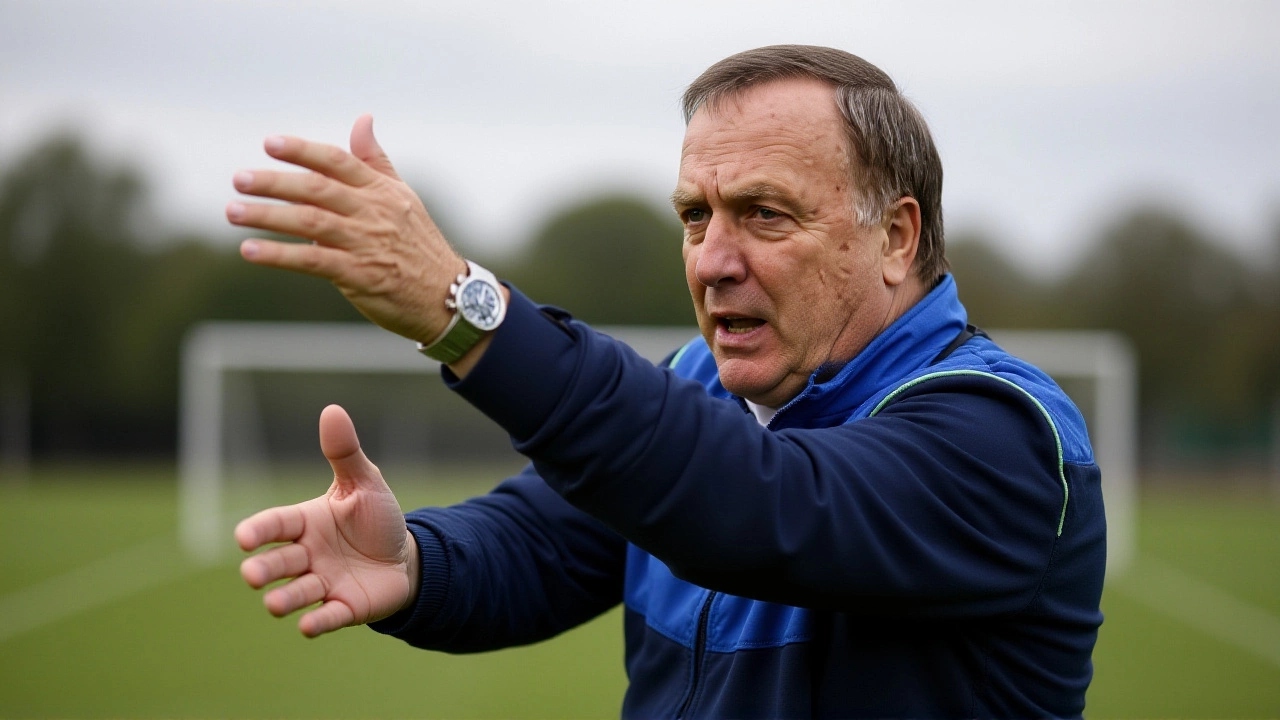
When Dick Advocaat stepped onto the pitch in Kingston on Tuesday night, he wasn’t just watching a football match—he was rewriting history. The 78-year-old Dutch manager had just guided Curaçao to their first-ever FIFA World Cup qualification, a feat no nation with a population under 200,000 had ever achieved. With a 1-1 draw against Jamaica, Curaçao topped their CONCACAF qualifying group, and Advocaat became the oldest manager ever to send a team to the World Cup, shattering the 15-year-old record held by Greece’s Otto Rehhagel.
A Manager Who Refuses to Retire
Advocaat’s career reads like a global football odyssey. He’s managed the Netherlands national team three separate times, guided South Korea to the 2002 World Cup quarterfinals, and coached clubs from Rangers to Sunderland. But his tenure at Sunderland—brief, turbulent, and often misunderstood—offers a surprising preview of his current triumph.Appointed in March 2015 after Gus Poyet’s sacking, Advocaat inherited a sinking ship. His first match was a 1-0 loss to West Ham. He won just four league games in 19 attempts. Yet, after a 4-1 thrashing by Crystal Palace, something clicked. Sunderland drew at Stoke, then beat Southampton and Everton back-to-back. He brought in Jeremain Lens and Ola Toivonen—players he’d worked with at PSV—and trusted them implicitly. It wasn’t glamorous. It wasn’t sustainable. But it worked… for a while.
He resigned in October 2015, Sunderland in 19th place. Critics called it failure. But those who watched closely saw something else: a man who understood loyalty, familiarity, and psychological cohesion over flashy tactics. That same philosophy is now delivering miracles in the Caribbean.
Curaçao: The Smallest Nation on Football’s Biggest Stage
Curaçao’s population? Roughly 158,000. That’s smaller than many English towns. Their national stadium holds 5,000 fans. Their budget? A fraction of what Brazil or Germany spends on youth academies. Yet here they are—qualified for the 2026 World Cup, co-hosted by the United States, Canada, and Mexico.Advocaat didn’t rebuild Curaçao from scratch. He didn’t need to. He found the core—a blend of Dutch-trained players, local talent from the island’s rich football culture, and a handful of diaspora stars from the Netherlands and the U.S. He instilled discipline. He simplified the game. He made them believe.
“This isn’t luck,” said Ricardo van der Linde, a former Curaçao midfielder now working as a scout. “Dick doesn’t talk about tactics for hours. He talks about pride. About who you play for. That’s what made the difference.”
The Record That Will Stand for Decades
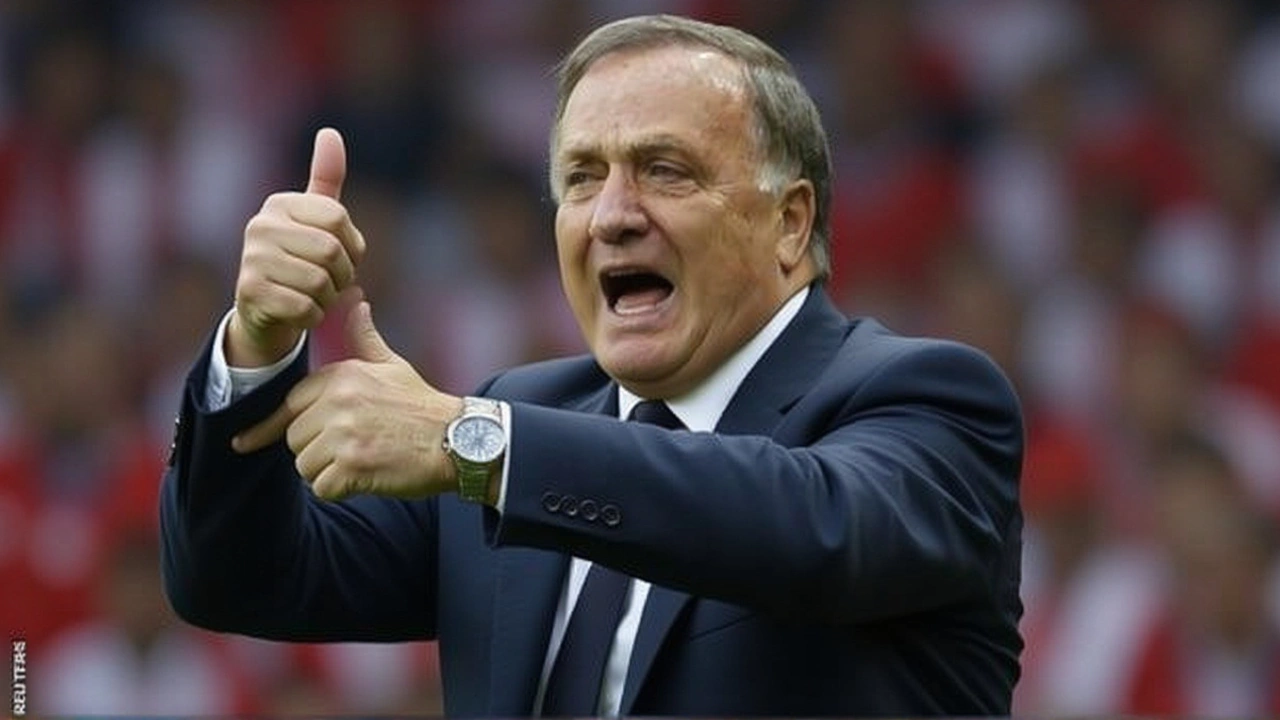
Otto Rehhagel was 71 years and 317 days old when Greece played Argentina in 2010. Advocaat will be 78 years and 147 days old when Curaçao opens their 2026 campaign. That’s nearly seven years older than the previous benchmark. No one else even comes close. The next-oldest active manager in international football is 65. Advocaat is playing in a league of his own.ESPN called this “arguably his greatest against-all-odds glory.” And they’re right. He didn’t just manage a team to qualification—he defied time, logic, and the very structure of global football. No one expects Curaçao to win a match in 2026. But they’ll be there. And Advocaat will be on the sideline, clipboard in hand, calm as ever.

What Comes Next?
Advocaat says he has no plans to retire after the World Cup. He’s already begun scouting for the 2030 qualifiers, even joking with local reporters that he might still be around if Curaçao makes it to 2034. Whether that’s realistic or not, the message is clear: age is just a number when you’ve got the right mindset.For now, the world watches. A tiny island nation, led by a man who once barely survived in the Premier League, is about to take the biggest stage in sport. And if you think that’s not inspirational, you’ve forgotten why we love football.
Frequently Asked Questions
How did Curaçao qualify for the 2026 World Cup despite their small population?
Curaçao finished top of their CONCACAF qualifying group with 13 points from six matches, including a crucial 1-1 draw against Jamaica that sealed their spot. They leveraged disciplined defending, strong set pieces, and a core of players with Dutch football training. Their success came not from spending but from cohesion—Advocaat’s emphasis on unity and familiarity over star power made the difference.
Why is Dick Advocaat considered the perfect fit for Curaçao?
Advocaat has a proven track record of succeeding with underdog teams, especially those with Dutch ties. He knows how to manage limited resources, relies on trusted players from past clubs, and thrives in high-pressure environments. His calm demeanor and tactical clarity contrast sharply with the chaos he faced at Sunderland—making him uniquely suited to stabilize a team with little international experience.
What impact will Curaçao’s qualification have on Caribbean football?
Curaçao’s breakthrough could reshape youth development across the region. Nations like Suriname, Guyana, and Haiti may now see World Cup qualification as achievable. Local federations are already planning increased funding for grassroots programs, and FIFA has signaled potential financial incentives for small nations that qualify. This isn’t just a win for Curaçao—it’s a blueprint.
Has any other manager led teams to the World Cup at such an advanced age?
No. Otto Rehhagel, who led Greece in 2010, held the record at 71 years and 317 days. Advocaat will be over seven years older when he takes Curaçao to the 2026 World Cup. Even legendary figures like Sir Alex Ferguson or Carlo Ancelotti retired from international management well before 70. Advocaat’s longevity is unprecedented—and likely unbreakable.
What was Advocaat’s record at Sunderland, and how does it compare to his success with Curaçao?
At Sunderland, Advocaat managed 19 games: 4 wins, 6 draws, 9 losses. He was dismissed after just seven months. Yet, his signings—Lens, Toivonen, Borini—were all players he’d previously succeeded with. His Curaçao success mirrors that pattern: trust, repetition, and psychological stability. The difference? In Curaçao, he had time, loyalty, and no media frenzy. The same man, different context.
Will Dick Advocaat manage beyond the 2026 World Cup?
Advocaat has hinted he’s not done yet. He’s already begun informal scouting for the 2030 qualifiers and has expressed interest in staying on if Curaçao qualifies again. At 78, he’s not just defying age—he’s redefining what’s possible in football management. If he’s still on the sideline in 2030, no one should be surprised.
